|
|
|
|
An ‘unusual’ time for travel to the EU in June, but primarily driven by the ISO TC210 WG1 meeting in Prague, to start things off, before heading to Spain, France, Switzerland, Germany. In the meantime, the TGA is tightening mandatory reporting frameworks for device sponsors while reinforcing its UDI database, a new patient preference data presented at EAACI 2026 highlights growing momentum behind needle-free adrenaline delivery devices, with cross-border innovation frameworks are gaining ground from Southeast Asia to East Africa, reshaping how governments approach health system development. Access-2-Healthcare is across all of it, here is your June edition!
|
|
|
|
|
|
|
|
|
|
WHAT ARE THE LATEST IN HEALTHCARE POLICIES TODAY? |
|
|
|
|
|
Ministry of Science and Technology and Australia foster innovation cooperation towards substantive growth impacts |
|
The Ministry of Science and Technology of Vietnam partnered with Australian government delegates to launch an expanded bilateral innovation framework to drive long-term socioeconomic growth. The initiative establishes funded cooperation pathways for technology transfers, public-private commercialization models, and direct technical knowledge sharing across emerging manufacturing and digital infrastructure ecosystems. By anchoring cooperative research links, the program accelerates the integration of digital tools and clinical supply optimizations within the Southeast Asian healthcare matrix.
|
|
|
|
|
|
|
|
Proposed expansion of maternal and child healthcare benefits under the Primary Healthcare Fund
|
|
The Ministry of Health Kenya has proposed a specialized Maternal, Newborn, and Child Health benefit package to be integrated directly into the national Primary Healthcare Fund. This strategic policy development aims to restructure healthcare financing to remove cost barriers and expand essential clinical service access across public facilities nationwide. The initiative reflects a major government-led healthcare system reform focused on improving maternal health outcomes and accelerating universal health coverage. |
|
|
|
|
|
|
|
Health and Social Care Secretary outlines national NHS modernisation and prevention initiatives
|
|
At NHS ConfedExpo 2026, the UK Health and Social Care Secretary set out government plans to modernise the NHS in line with a 10‑Year Plan and Medium‑Term Planning Framework. The speech emphasised shifting the system towards prevention‑led care, cutting backlogs through structural modernisation, and deploying “Health and Growth Accelerator” pilots to prevent long‑term sickness and support the wider economy. These initiatives are intended to link health improvement with national productivity by investing in earlier intervention, better technology and more efficient models of care. |
|
|
|
|
|
|
|
|
|
ANNOUNCEMENTS FROM COUNTRIES WHERE WE HAVE A PRESENCE |
|
|
|
|
|
Roche receives FDA approval for the first companion diagnostic to assess PTEN protein in prostate cancer
|
|
Roche announced that its VENTANA PTEN (SP218) RxDx Assay has received FDA approval as the first immunohistochemistry companion diagnostic test to identify PTEN protein loss. Developed to run on fully automated BenchMark staining platforms, the assay identifies patients with PTEN-deficient tumors who may be eligible for targeted combination therapies. This launch reinforces Roche's diagnostic footprint and expands its precision oncology pipeline to support customized healthcare decision-making.
|
|
|
|
|
|
|
|
ALK-Abelló presents patient preference data for EURneffy nasal spray at EAACI 2026
|
|
ALK-Abelló shared new data showing that fear of needles (needlephobia) remains a barrier for some patients who are at risk of severe allergic reactions. The findings suggest that needle-free treatment options such as EURneffy nasal spray may improve patient acceptance and help more people carry emergency medication when needed.
|
|
|
|
|
|
|
|
|
|
|
|
MHRA launches pioneering AI health innovations regulatory sandbox in London
|
|
The Medicines and Healthcare products Regulatory Agency, in partnership with NHS England (London) and the London Health Innovation Networks, has launched a dedicated regulatory sandbox for artificial intelligence. The multi-partner initiative, named London Region I, creates a secure, real-world clinical environment to safely deploy AI-enabled medical devices while generating additional evidence of benefit across operational NHS settings. Up to ten medical device manufacturers will be selected for the initial phase to establish clear, outcomes-based evidence and form a predictable validation route to wider clinical market adoption.
|
|
|
|
|
|
|
|
TGA updates Australian UDI Database production environment with new validation rules
|
|
The Therapeutic Goods Administration has deployed critical system enhancements to the live production environment of the Australian UDI Database (AusUDID). To ensure stricter alignment with the updated Australian UDI Data Dictionary, the system validation rules have been modified to allow medical device records to contain both a Direct Marked Device Identifier (DI) and a Unit of Use DI. These infrastructure modifications directly affect all sponsors and manufacturers submitting device data, introducing improved background synchronization routines across active internal TGA tracking registries.
|
|
|
|
|
|
|
|
Latest list of Designated Notified Bodies |
|
|
|
|
|
|
|
|
|
PRODUCT COMMERCIALISATION |
|
|
|
Articles to help your journey in commercialisation |
|
|
|
|
|
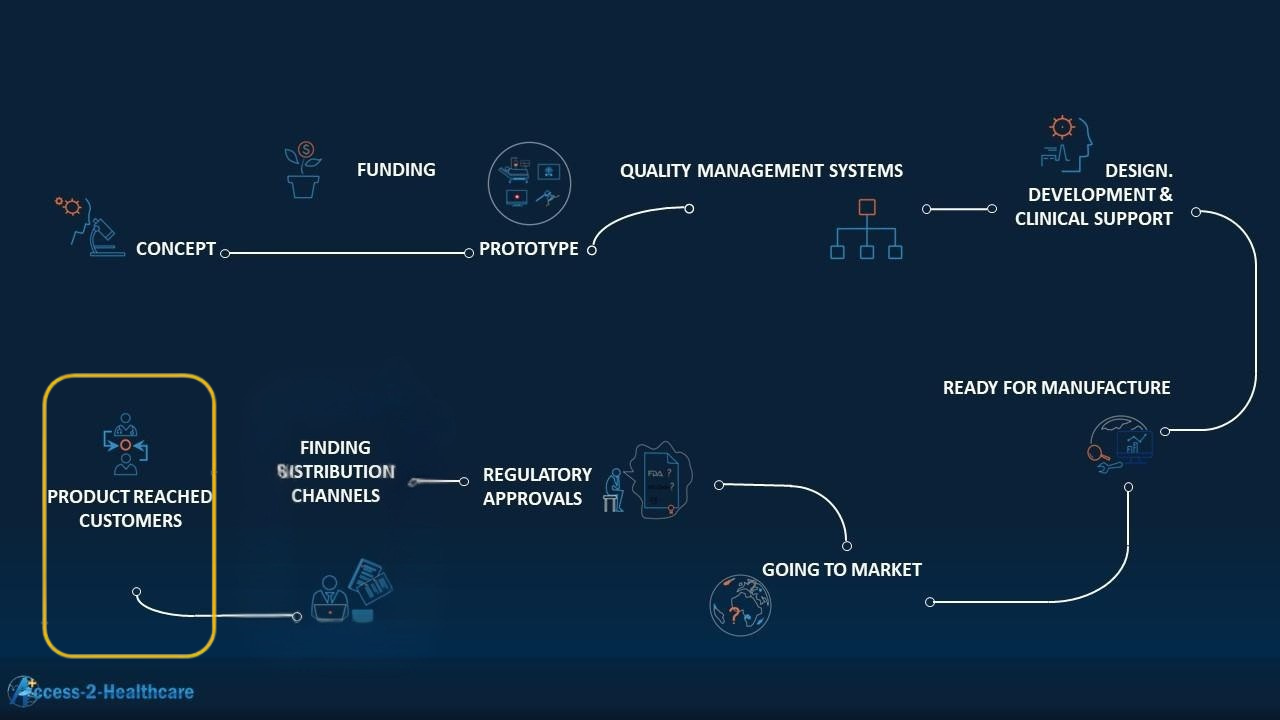
PRODUCT REACHED CUSTOMERS Wearables that are Medical Devices
Wearables that are medical devices are a subset of home or remote monitoring devices. Typically, they are either purchased directly, dispensed from a pharmacy with or without a prescription, or supplied directly from a clinic or hospital — depending on the device. This is one modality that will increasingly become popular as we integrate the monitoring of our health — physical and mental — more closely into our daily lives.
Most of the key considerations have been well discussed: cybersecurity, data residency, accuracy, clinical claims, and usability.
But there will gradually be another type of wearable that may sit even closer to you — contact lenses, patches, dermal implants, or just implants.
Then what happens? Biocompatibility. Longer, more expensive studies. But is it worth the effort?
If the chemistry is done right — and with the ability to sample at much higher rates and greater stability (most wearables are constantly moving: watches, rings, glasses, with the exception of earbuds) — there is real potential to collect and trend this data. With increasing processing power, this leads to new insights into preventative medicine.
Perhaps one day, a single chip somewhere on your body will be enough to monitor your health. And perhaps, one day, we will have mini robots working tirelessly within us to fix ourselves. Most people don't actually fear death — but how we get there.
What do you think?
|
|
|
|
|
|
|
|
|
|
|
|
|
|
|
|
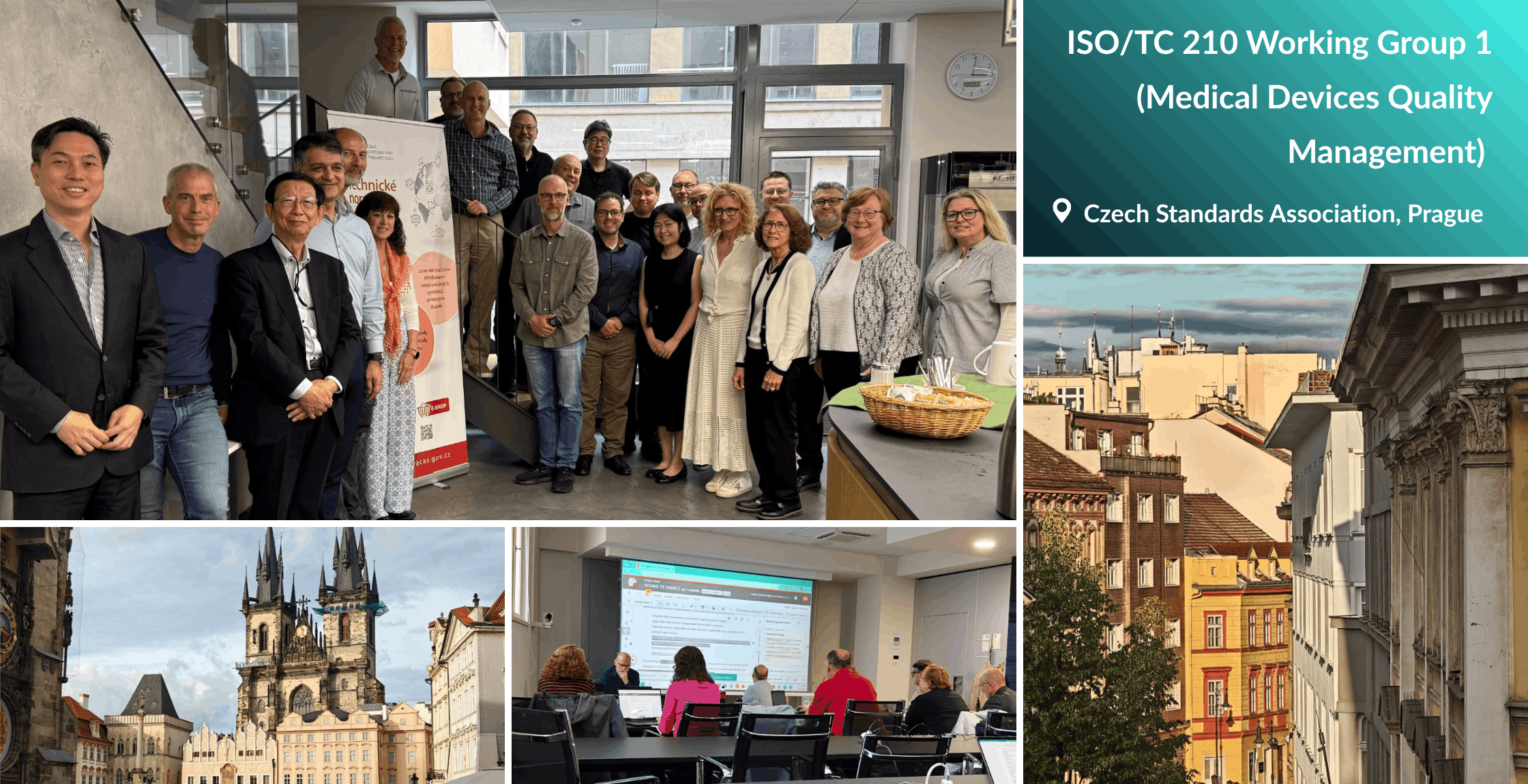
The ISO/TC 210 Working Group 1 on Medical Devices Quality Management convened in Prague, Czech Republic from 8 to 12 June 2026, hosted at the Czech Standards Association. The group systematically reviewed Working Draft Technical Specification ISO/WD TS 23485.2 — which provides guidance for ISO 13485 and standardises quality management systems for health-purpose products. Working through more than 800 comments and proposed changes submitted by member bodies, the group resolved 300 comments and proposed resolutions for a further 500. Clause 4.2.3 on the medical device file attracted the highest volume of discussion, drawing almost 100 comments. Our Group Director, was present at the meeting - 15 years and still going strong - as part of his contribution towards international quality management standards development.
|
|
|
|
|
|
|
|
|
|
|
|
MedTech Gatherings happening in July 2026! |
|
|
|
International Healthcare Week 2026 (Featuring Medtec Southeast Asia & CPHI SEA) Queen Sirikit National Convention Center (QSNCC), Bangkok, Thailand July 8–10, 2026
More info ⟶ |
Medical Technology Germany 2026 Ulm-Messe Exhibition Grounds, Ulm, Germany July 1–2, 2026
More info ⟶ |
|
WHX Osaka 2026 (World Health Expo Japan) INTEX Osaka, Japan
Jun 2–4, 2026
More info ⟶ |
Smart Health Asia 2026
Singapore
July 1–2, 2026
More info ⟶ |
|
|
|
|
|
|
|
|
|
|
|
|
|
|
|
|
|

.png)
.png)